
The Rams and Fourth Down
The Wisdom of CrowdsThe book uses Mike Martz’s Super Bowl decisions to show how professional convention and reputational risk can defeat better analysis.
increasing Bearing strength in each event
 decreasing
Bearing strength in each eventdecreasingThe Favorite Arrives

A Team Built to Win
A Powerful Offense
The St. Louis Rams entered the Super Bowl as fourteen-point favorites, after a season of exceptional offensive production. Their record and scoring made victory look likely.
Head coach Mike Martz nevertheless faced decisions where customary football practice favored caution over aggressive attempts to keep possession.
A Test of Strategy
The game offered a vivid setting for a question about expertise: would a professional coach follow inherited conventions, or make choices informed by the value of each possible outcome?
The book uses the moment not to blame one loss on two plays, but to expose a general pattern in expert decision-making.
The First Field Goal

Points Over Possession
A Fourth-and-Three
The Rams advanced to the Patriots’ 32-yard line and faced fourth down with three yards needed. Martz sent in the kicker, who made the field goal and put St. Louis ahead 3–0.
The decision matched the conventional rule that teams should take available points rather than risk losing possession.
The Unasked Comparison
David Romer’s analysis compared a field-goal attempt with the expected value of going for a first down. Depending on field position and success rates, the riskier choice could produce more expected points.
The first kick therefore becomes an example of conventional confidence preceding a systematic evaluation of alternatives.
The Second Kick
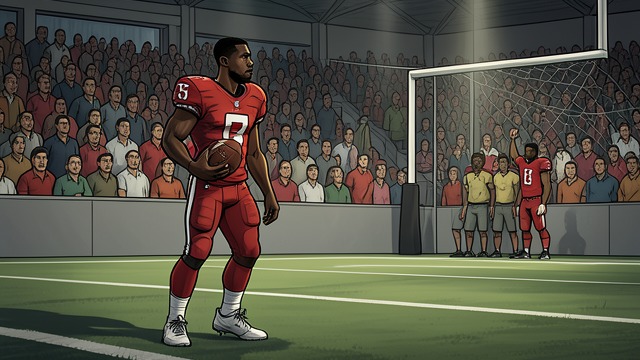
Caution Repeats
Another Fourth Down
After another drive stalled, this time at the Patriots’ 34-yard line with five yards needed, Martz again chose the kicking team. The attempt went wide left, leaving the Rams without points.
The decision followed the same conservative logic, even though the team’s field position gave a first-down attempt potential value.
A Pattern Beyond One Game
Romer’s calculations suggested teams should go for it more often than they did, particularly in circumstances like these. Across seasons, teams repeatedly chose punts or field goals in situations where the analysis favored aggression.
The significance is not that one calculation settles every football decision, but that an entrenched professional norm can survive despite evidence against it.
The Cost of Deviating

Reputation as a Constraint
Failure in Public
A coach who follows convention and fails can share responsibility with every peer who made the same choice. An unconventional failure is more visible and can be treated as evidence of personal incompetence.
This creates an incentive to look reasonable to employers and colleagues, even when a different strategy offers better long-run odds of winning.
Herding in a Clubby Profession
The coaching community was described as insular and slow to accept statistical challenges. If no one else goes for it, a coach can infer that the play is unsound, even when that inference is weak.
The thread turns Martz’s choices into a conflict between strategic value and career safety: being right in expectation may be less attractive than failing conventionally.
A Different Coach

Innovation Against Convention
A Possible Exception
The book identifies Bill Belichick as a coach who appeared to take Romer’s ideas seriously. His readiness to reject conventional wisdom was part of a broader pattern of strategic independence.
The comparison does not prove that aggressiveness alone produced the Patriots’ success. It indicates that an organization may gain an advantage when it questions habits others treat as rules.
The Thread’s Resolution
Martz’s decisions reveal how incentives and imitation can block an analytically stronger approach. Belichick represents the possibility that an individual with authority can interrupt that pattern.
The larger lesson returns to collective judgment: a profession becomes smarter when it allows diverse strategies to be tested instead of treating precedent as proof.
Before Super Bowl XXXVI
Midway through the first quarter
Six minutes after the first Rams field goal
The chapter’s explanation of coaching incentives
The Patriots’ Super Bowl period in the early 2000s
